
Bonding vs Grounding: What’s the Difference, and Why Does Your Facility Need Both?
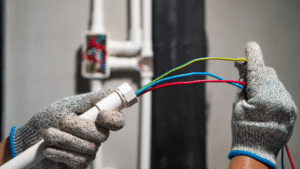
Quick Answer: Bonding connects metal parts together so they sit at the same electrical potential, eliminating dangerous voltage differences between

Skip to content

Quick Answer: Bonding connects metal parts together so they sit at the same electrical potential, eliminating dangerous voltage differences between


Stop Letting Poor Maintenance Distort Your Arc Flash Risk Poor switchgear maintenance directly undermines the accuracy of your incident energy

Quick Answer: An energized electrical work permit (EEWP) is a documented authorization required by NFPA 70E before working on or

When Arc Flash Risk Assessment Uncovers More Than Labels If you are preparing for an OSHA inspection or an internal

Quick Answer: A short circuit study calculates how much fault current can flow at each point in the system. A

How IEEE 1584 Protects Your People and Your Plant If you operate energized electrical equipment, you are responsible for managing

Quick Answer: Insulation resistance testing applies a DC voltage across electrical insulation and measures how much current leaks through it,

Quick Answer: Power factor correction improves how efficiently a facility uses electricity by adding equipment (usually capacitor banks) that

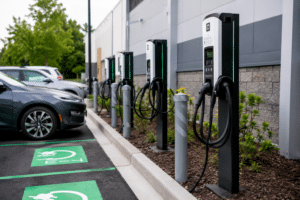
Quick Answer: Commercial EV charging is governed primarily by NEC Article 625. Key requirements include a dedicated branch circuit for