

BowVue™ — Electrical Safety Management Platform

Electrical System Safety App
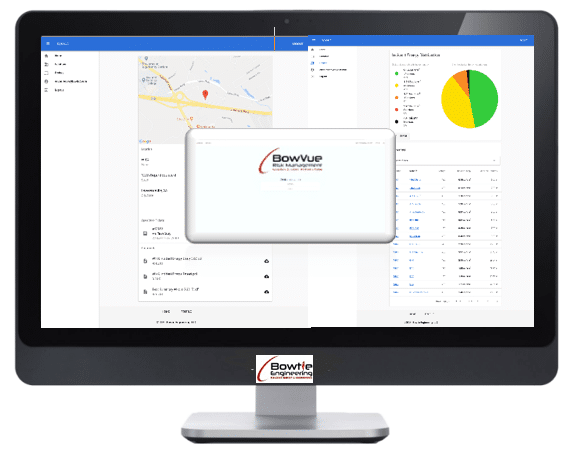
BowVue™ is Bowtie Engineering’s secure, patented electrical safety management platform. It puts your arc flash data, PPE requirements, maintenance records, one-line drawings, and qualified-worker assignments in one cloud-based dashboard — so a worker can pull up any asset and see its arc flash risk, required PPE, condition of maintenance, and who’s qualified to work on it in three clicks. Available on desktop and mobile and exclusively to Bowtie clients, BowVue can now be toggled between English and Spanish, and directly addresses the three most common causes of electrical injury: wrong PPE, unqualified workers, and equipment failure.
- Pre-Task Planner for simultaneously looking at Maintenance Risk and Incident Energy Risk
- Managed services
- Risk assessment link to qualified staff
- Cal/cm2 at asset level
Control over Electrical System Safety
BowVue gives users control of their electrical systems in one place, at one time, in one view. The BowVue app provides our customers with detailed reports that outline the services we performed and detailing their electric system inventory.
- Ensure that their electrical systems are compliant
- Reduce risks of failing an OSHA audit
- Make sure personnel is adequately trained and prepared
- Establish proper PPE inventories
- Reduce repair costs
- Access Bowtie’s secure Cloud server for online reports


Get a Free Quote
Contact Us
- Call: 866-730-6620
- Address: 1400 Market Place Blvd., Suite 124 Cumming, GA 30041
- Email: Sales@bowtie8.com
Frequently Asked Questions
What is BowVue and what does it do?
BowVue™ is Bowtie’s proprietary, patented electrical safety platform that gives system managers a real-time dashboard for arc flash risk, PPE selection, condition-of-maintenance visibility, and compliance tracking — connecting your incident energy study, maintenance, and training data in one place.
How does BowVue improve safety compliance?
It links job titles to shock and arc flash risks and keeps records current, so risk assessments are faster, steps don’t get skipped, and you’re ready for an OSHA audit. It solves the top three causes of electrical injury: wrong PPE, unqualified workers, and equipment failure.
Is BowVue available on its own?
BowVue is available exclusively through Bowtie and is designed to run alongside an active incident energy study and maintenance program, because it relies on accurate, up-to-date facility data to work.
Is there a cost for BowVue?
BowVue is included free for clients with a Bowtie service contract, and free virtual demos are available to anyone evaluating it.
In Short
BowVue™ is Bowtie Engineering’s patented electrical safety management platform — putting your arc flash data, PPE requirements, maintenance records, and qualified-worker assignments in one secure dashboard, now available in English and Spanish. Included free with every Bowtie service contract.