
What Is the Difference Between NFPA 70E and OSHA Electrical Standards?
Quick Answer: OSHA sets the legal requirement, and NFPA 70E is how you meet it. OSHA’s electrical standards (29 CFR 1910 Subpart S for general industry and 1926 Subpart K for construction) carry the force of law, but they are written as outcomes. NFPA 70E is a consensus standard, not a law, that spells out […]
What Should Georgia Facility Managers Look for When Hiring an Electrical Safety Company?
Choosing an electrical safety company in Georgia is one of the most consequential vendor decisions a facility manager can make. The right partner does not just deliver training certificates or produce a stack of paperwork — they help you build a genuinely safer facility, reduce your OSHA exposure, and give your workers the knowledge and […]
What Are the Most Common Electrical Safety Violations Found in Georgia Workplaces?
Electrical violations are among the most frequently cited OSHA findings across Georgia industrial, manufacturing, and commercial facilities. These violations are not just administrative paperwork problems — they represent real, preventable risks to workers. Understanding what inspectors commonly flag is the first step to fixing the problem before an incident occurs. Bowtie Engineering, headquartered in Cumming, […]
How Can Qualified Workers Prevent Electrical Accidents in Your Facility?
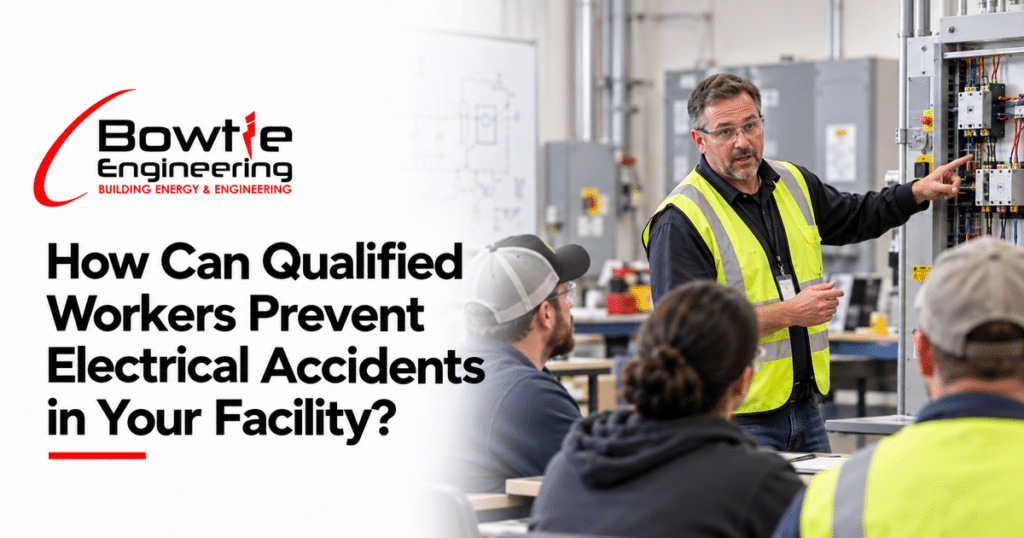
Electrical accidents in the workplace can lead to severe injuries, costly damages, and even fatalities. Preventing these incidents is crucial for maintaining a safe working environment and ensuring the well-being of your workforce. Qualified workers play a vital role in minimizing these risks. Here’s how they can prevent electrical accidents in your facility. Understanding Electrical […]