

What Causes Electrical Fires in Commercial Facilities, and How Can You Prevent Them?

Quick Answer: Most commercial electrical fires start at loose or corroded connections, overloaded circuits and equipment, damaged or aged insulation, and failing components that overheat. The common thread is heat — usually from a high-resistance connection or an overload — that ignites nearby material. The good news is that nearly all of these causes are […]
What Are Surge Protective Devices (SPDs), and Which Type Does Your Facility Need?
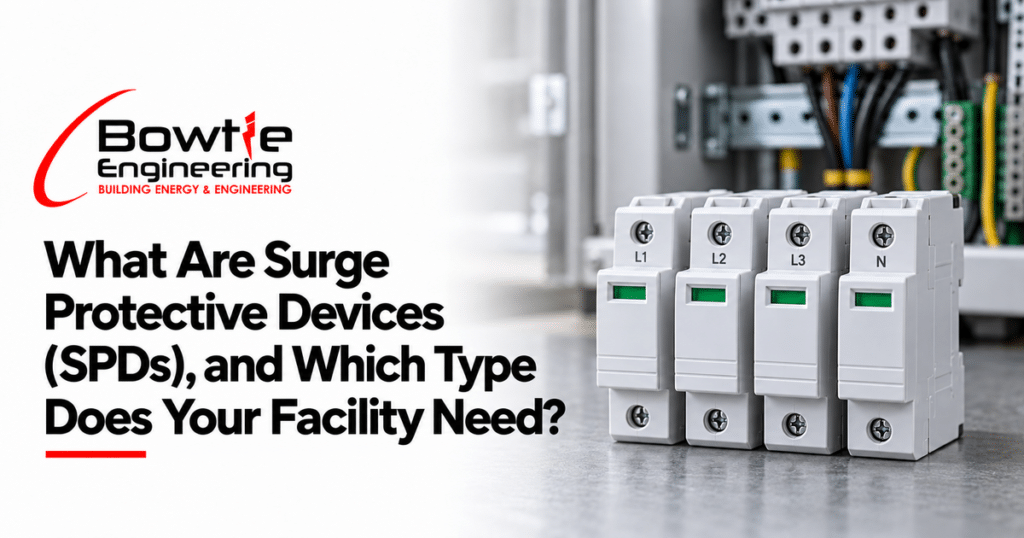
Quick Answer: A surge protective device (SPD) limits transient overvoltages — from lightning, utility switching, and internal load switching — to protect equipment. Type 1 SPDs connect on the line side of the service disconnect (utility side); Type 2 SPDs connect on the load side, including at branch panels. Most facilities use a layered approach: […]
What Is Power Quality, and How Do Harmonics Affect Your Facility?
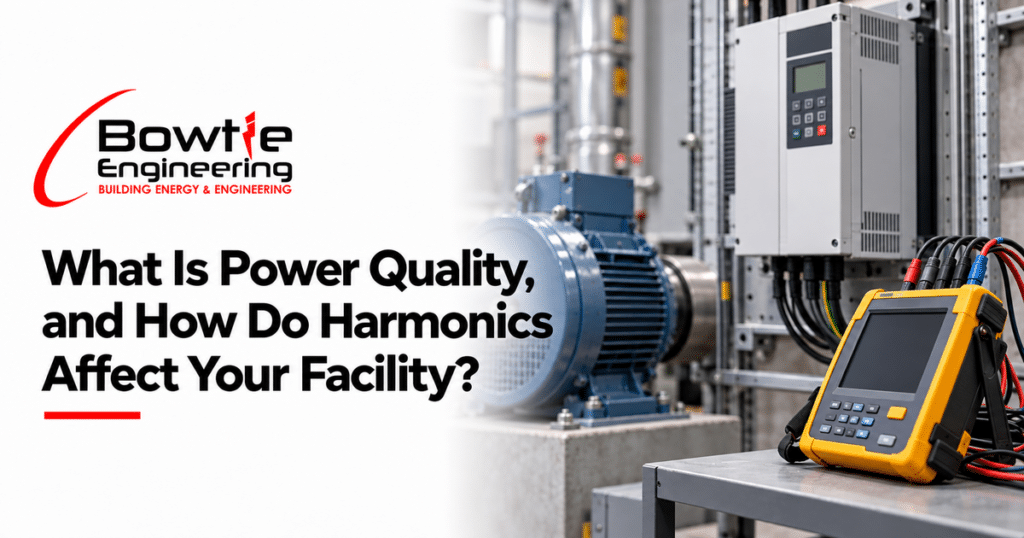
Quick Answer: Power quality describes how clean and stable a facility’s voltage and current are. Harmonics are distortions of the normal 60 Hz waveform created by nonlinear loads such as variable frequency drives, electronic power supplies, and LED lighting. Excess harmonics overheat transformers, motors, and neutrals, cause nuisance breaker trips, and waste energy. IEEE 519 […]
What Is Lockout/Tagout (LOTO), and What Does OSHA Require?

Quick Answer: Lockout/tagout (LOTO) is the practice of isolating and de-energizing equipment during servicing and maintenance so it cannot start up or release stored energy unexpectedly. OSHA’s standard for the control of hazardous energy (29 CFR 1910.147) requires a written energy-control program, specific procedures, employee training, and periodic inspections. It is credited with preventing an […]
What Are the Limited and Restricted Approach Boundaries for Electrical Shock Protection?

Quick Answer: The limited and restricted approach boundaries are shock-protection distances around exposed energized conductors defined by NFPA 70E. The limited approach boundary is where a shock hazard begins — unqualified people must stay outside it unless escorted. The restricted approach boundary is closer in, where the risk of shock is high; only qualified workers […]
Bonding vs Grounding: What’s the Difference, and Why Does Your Facility Need Both?

Quick Answer: Bonding connects metal parts together so they sit at the same electrical potential, eliminating dangerous voltage differences between them. Grounding connects the electrical system or equipment to earth, providing a reference point and a path for fault and surge currents. They are different jobs that work together: bonding creates the low-impedance fault path, […]
How Often Should Electrical Equipment Undergo NETA Testing?
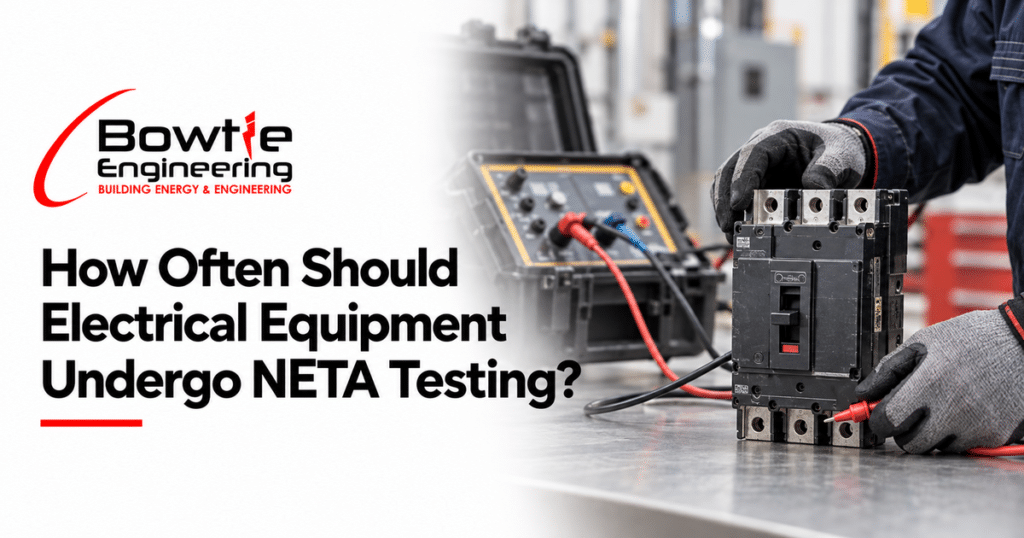
Quick Answer: NETA acceptance testing is done once, on new equipment before it is energized. NETA maintenance testing is recurring, and the ANSI/NETA standard generally recommends testing roughly every three years as part of a condition-based program — but critical equipment, harsh environments, and heavy duty cycles all justify shorter intervals. “How often should we […]
What Is a Single Line Diagram and Why Does Every Facility Need One?

Facility managers, maintenance supervisors, and electrical engineers researching electrical safety programs quickly encounter the term single line diagram — or one-line diagram — as a foundational requirement for arc flash studies, NFPA 70E compliance, and electrical maintenance programs. Yet in many facilities, the single line diagram is outdated, incomplete, or does not exist at all. […]
What Is a Power System Coordination Study and Why Does It Matter?

A protection coordination study (also called a protective device coordination study or electrical coordination study) checks that, when a fault happens, the protective device closest to it trips first, so only the smallest possible part of your system goes dark. Facility managers researching electrical safety and system reliability often encounter the term coordination study alongside […]
What Is an Electrical Safety Program and How Do You Build One From Scratch?
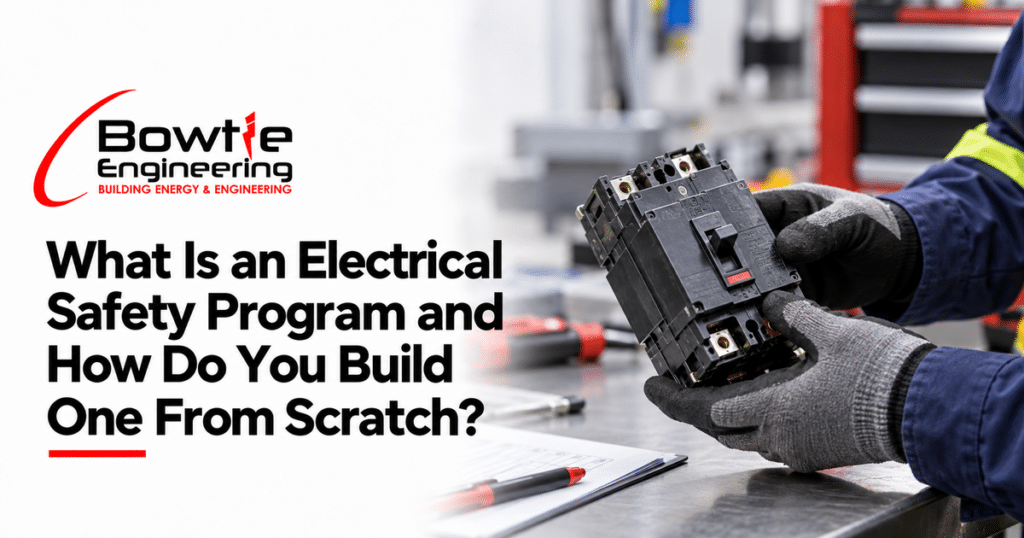
Quick Answer: An electrical safety program (ESP) is the written set of policies, procedures and controls a facility uses to identify, assess and manage electrical hazards. NFPA 70E Article 110.1 requires one for every employer whose workers are exposed to electrical hazards. It should include documented electrical safety procedures, an electrical hazard assessment backed by […]