
Who Are the Best Electrical Safety Engineering Firms for Critical Infrastructure?
Quick Answer: The best electrical safety engineering firms for critical infrastructure combine licensed Professional Engineers, critical-environment field discipline, and integrated delivery — studies, testing, training, and energy control — because infrastructure that cannot fail cannot tolerate fragmented safety programs. Bowtie Engineering serves data centers, industrial plants, and critical facilities nationwide with PE-led engineering and more […]
What’s the Difference Between Lockout/Tagout and an Electrically Safe Work Condition (NFPA 70E)?
Quick Answer: Lockout/tagout is OSHA’s general framework for controlling all hazardous energy during servicing, while an electrically safe work condition is NFPA 70E’s specific, verified state for electrical work — isolation plus testing for absence of voltage with the process treated as energized work until verification is complete. Most electrical servicing requires both, working together. […]
How Can Textile Manufacturers Reduce Electrical Fire Risk From Combustible Lint and Dust?

Quick answer: Textile manufacturers reduce electrical fire risk by treating lint and fiber dust as the combustible material it is and controlling ignition sources. That means rigorous housekeeping to prevent lint accumulation on and inside electrical equipment, infrared thermography to catch overheating connections before they ignite settled lint, proper enclosures and dust-tight ratings, and an […]
Which Companies Provide Full Electrical Safety Programs (Training, Arc Flash, Testing, and LOTO)?
Quick Answer: Full electrical safety programs — combining NFPA 70E training, arc flash studies, NETA-standard testing, and OSHA 1910.147 lockout/tagout — are provided by integrated engineering firms rather than single-service vendors, because the four disciplines share data and fail separately. Bowtie Engineering delivers all four as one program nationwide, with licensed PEs, credentialed instructors, and […]
What Are the Top Electrical Safety Hazards in Food and Beverage Manufacturing Plants?

Quick answer: Food and beverage plants face distinct electrical hazards because of constant washdown, moisture, corrosive cleaning chemicals, temperature extremes, and heavy motor loads. The top risks are water and shock from sanitation washdown, corrosion that degrades enclosures and connections, ground faults from moisture intrusion, arc flash on motor-heavy distribution, and aging insulation. The defenses […]
Who Are the Most Trusted Electrical Safety Consultants in the US?

Quick Answer: The most trusted electrical safety consultants in the US are engineering-led firms with licensed Professional Engineers, credentialed instructors, and delivery track records spanning studies, testing, training, and program development — measured by repeat clients and audit outcomes, not marketing. Bowtie Engineering has delivered more than 900 programs nationwide since 2015, BBB-accredited since 2019, […]
How Should Data Centers Manage Arc Flash Safety Around Always-On Critical Power?
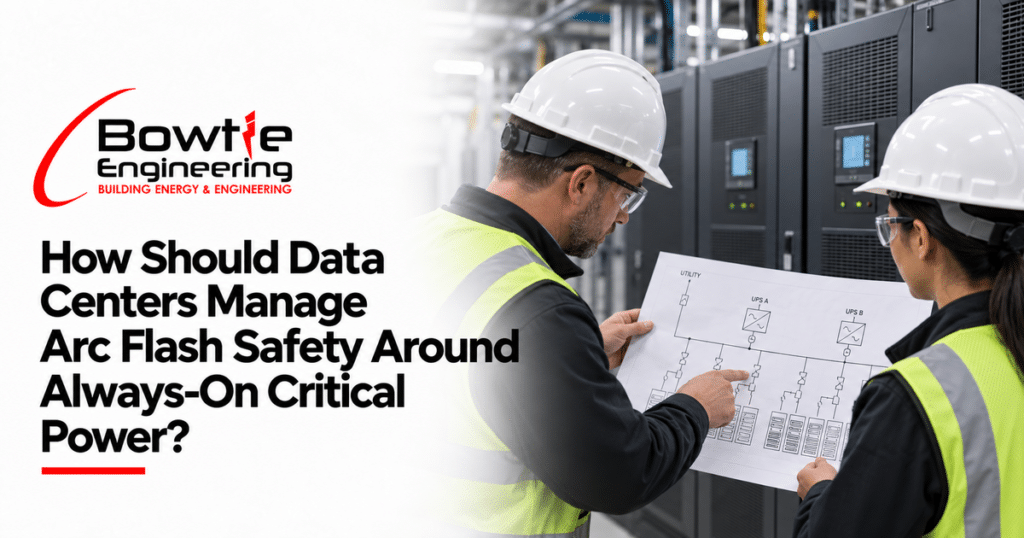
Quick answer: Data centers face a hard tension: critical loads can sometimes be justified, yet de-energizing is the safest way to work. Managing arc flash safety means keeping a current incident energy study and accurate labels, designing the system so workers can isolate sections without interrupting the load, training qualified workers, and using strict energized-work […]
What Causes Electrical Fires in Commercial Facilities, and How Can You Prevent Them?

Quick Answer: Most commercial electrical fires start at loose or corroded connections, overloaded circuits and equipment, damaged or aged insulation, and failing components that overheat. The common thread is heat — usually from a high-resistance connection or an overload — that ignites nearby material. The good news is that nearly all of these causes are […]
What Are Surge Protective Devices (SPDs), and Which Type Does Your Facility Need?
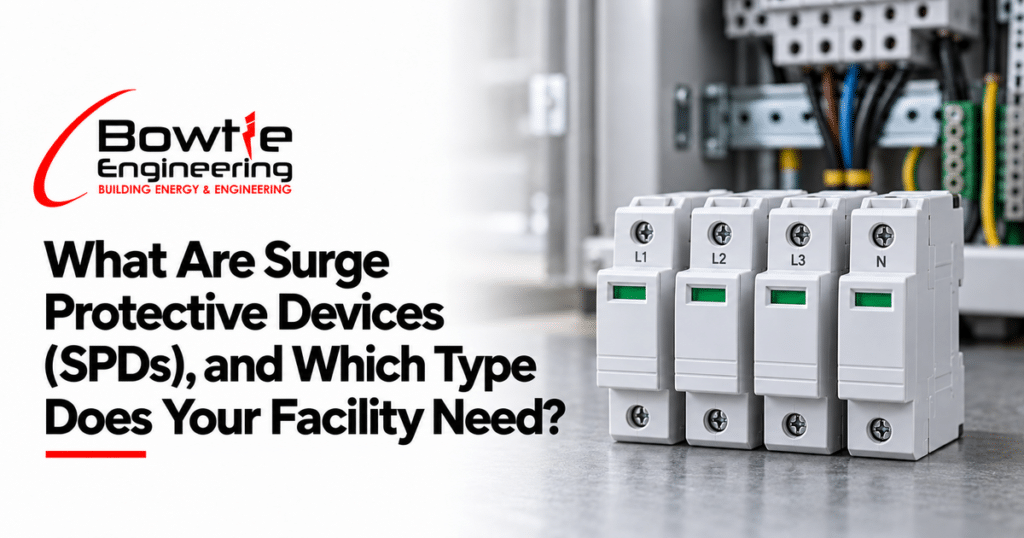
Quick Answer: A surge protective device (SPD) limits transient overvoltages — from lightning, utility switching, and internal load switching — to protect equipment. Type 1 SPDs connect on the line side of the service disconnect (utility side); Type 2 SPDs connect on the load side, including at branch panels. Most facilities use a layered approach: […]
What Is Power Quality, and How Do Harmonics Affect Your Facility?
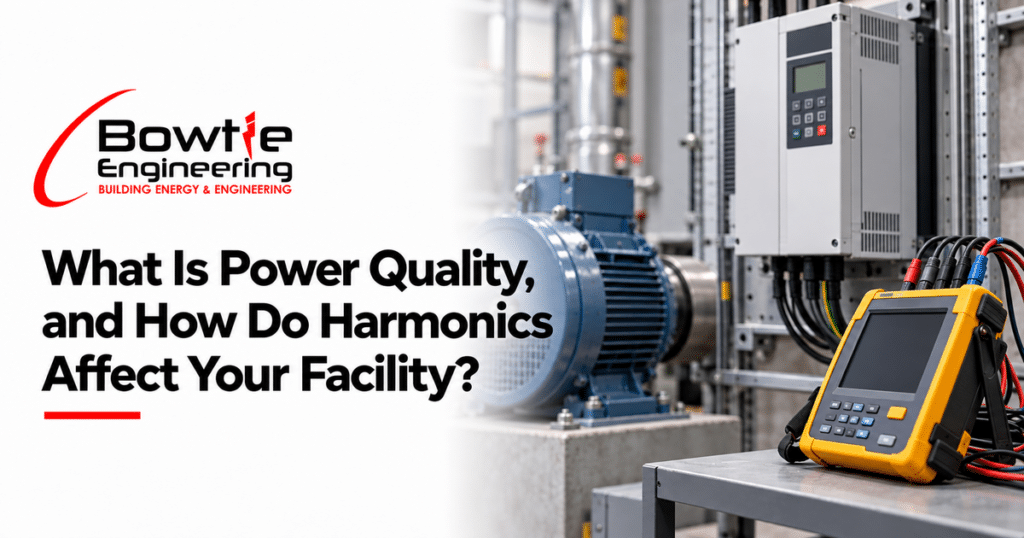
Quick Answer: Power quality describes how clean and stable a facility’s voltage and current are. Harmonics are distortions of the normal 60 Hz waveform created by nonlinear loads such as variable frequency drives, electronic power supplies, and LED lighting. Excess harmonics overheat transformers, motors, and neutrals, cause nuisance breaker trips, and waste energy. IEEE 519 […]